
Prescription opioids kill more than 22,000 Americans a year, but those deaths rarely make the news. The National Safety Council needed to humanize the crisis, show Americans their own risk, and push for a policy conversation in Washington.
The Work
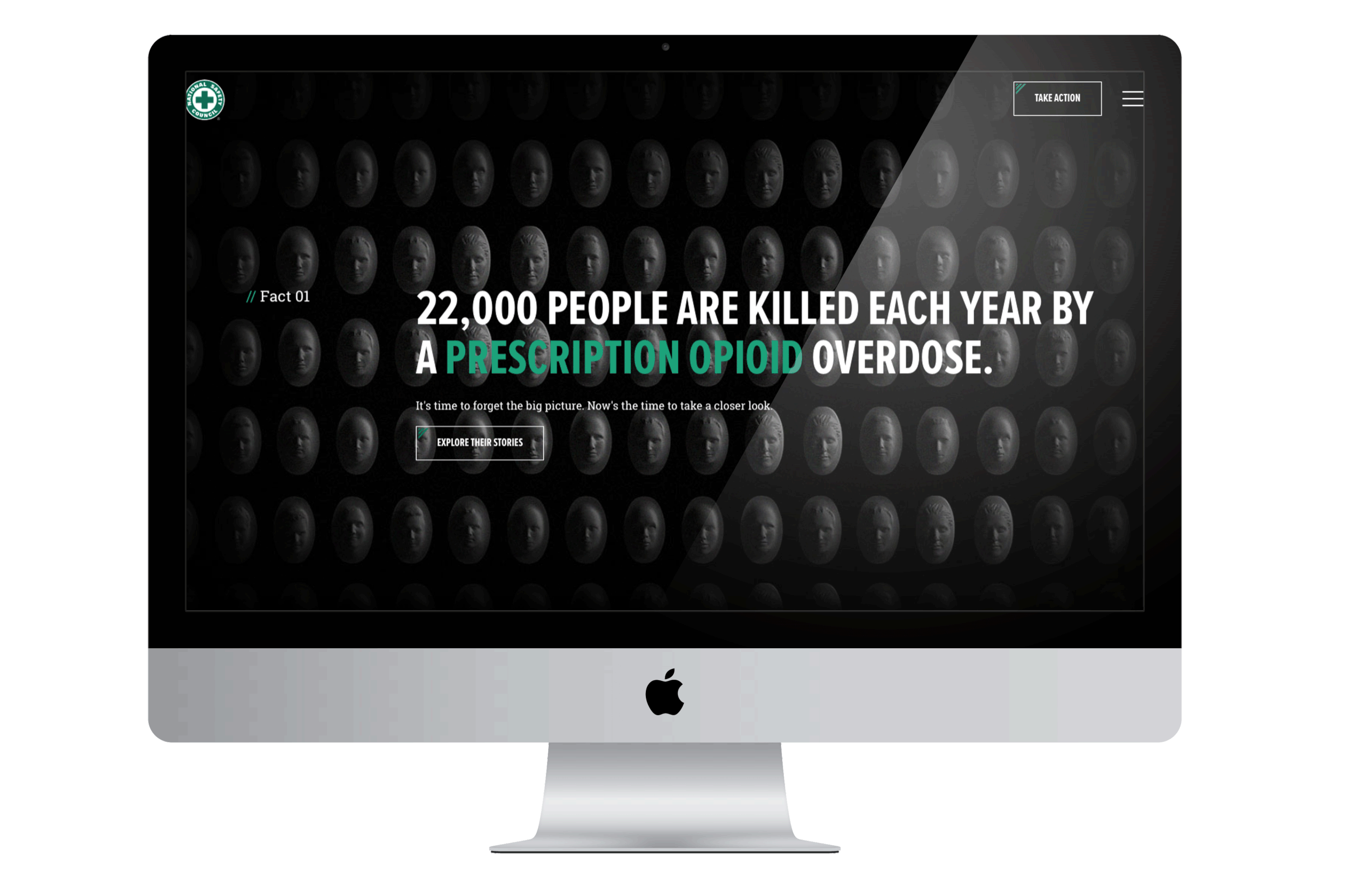
Prescribed to Death: a traveling memorial wall of 22,000 pills, each carved with the face of someone who died from a prescription opioid overdose. An onsite machine carved a new face every 24 minutes, the rate at which another life was lost. It launched in Chicago, toured Pittsburgh and Atlanta, and ended up at the White House Ellipse, where NSC used it to push lawmakers on opioid policy.
What I Did
As an art director/copywriter team, my partner and I carefully went through the photos, videos, stories and memories that families shared with us, and turned them into video stories. The size of the wall showed how big the crisis was. Our job was to show the people behind it. We also built an online version of the wall: an interactive site where visitors could click any pill to meet the person behind it and share their story. stopeverydaykillers.nsc.org
Case Study Video
The Website
Select Stories
See more at stopeverydaykillers.nsc.org
The Result
Prescribed to Death generated national news coverage, drove congressional hearings on opioid prescribing, and changed the conversation around prescription oversight at a federal level. The campaign ranked #6 most awarded globally (Big Won 2019), and Allie was named #2 Art Director at the ADC Awards and #3 at One Club.